





A new Touchpoint: the three phases of the Brand Portal
Custom portals fully in the hands of the client, from user management to asset uploading.
Discover the Case Studies
From the internal archive to the digital showcase
Brand Portals originate in Media Library — SeeCommerce
Discover the Case Study
User Management for Brand Portals — SeeCommerce
Discover the Case Study
Summary:
Results achieved:
- Reduction of the average time to retrieve assets for external agents: −32%.
- Stable adoption, with no drop-offs post-launch.
- 76% adoption within the first month by sales agents, effectively integrating the portals into their daily workflow.
- −15% working time dedicated to disseminating new assets, thanks to the autonomy of journalists and agents in retrieving them from the portals.
Team:
Giacomo Dalia; Warda development team; client stakeholders (Vibram, Campagnolo, Fulcrum)
My role:
UX/UI Designer — discovery, information architecture, micro-interactions, prototyping, and QA.
Introduction:
SeeCommerce was born as a SaaS platform dedicated to fashion brands, aiming to centralize data and content and distribute it across multiple digital touchpoints.
Throughout collaborations with various clients, the platform has been enriched with new features designed to make the sharing experience simpler, clearer, and more effective with different user targets, through touchpoints activated and managed independently on SeeCommerce.
From this, three cornerstone projects emerged, narrated in as many case studies.
Portals as a digital showcase
The first step was to transform internal archives into Brand Portals: fully manageable external spaces in SeeCommerce, designed to share assets with different targets (Press, Trade, partners). The project introduced unified search, a clear tree structure for navigation, and role and permission management, leading to a noticeable improvement in the speed with which sales agents and communication figures can retrieve the assets they need.
From the internal archive to the digital showcase
Completed in 2024.
Branded interface equipped with a search system, consultation, and download of assets shared by the brand
Result:
Reduction of the average time to retrieve assets −32%.
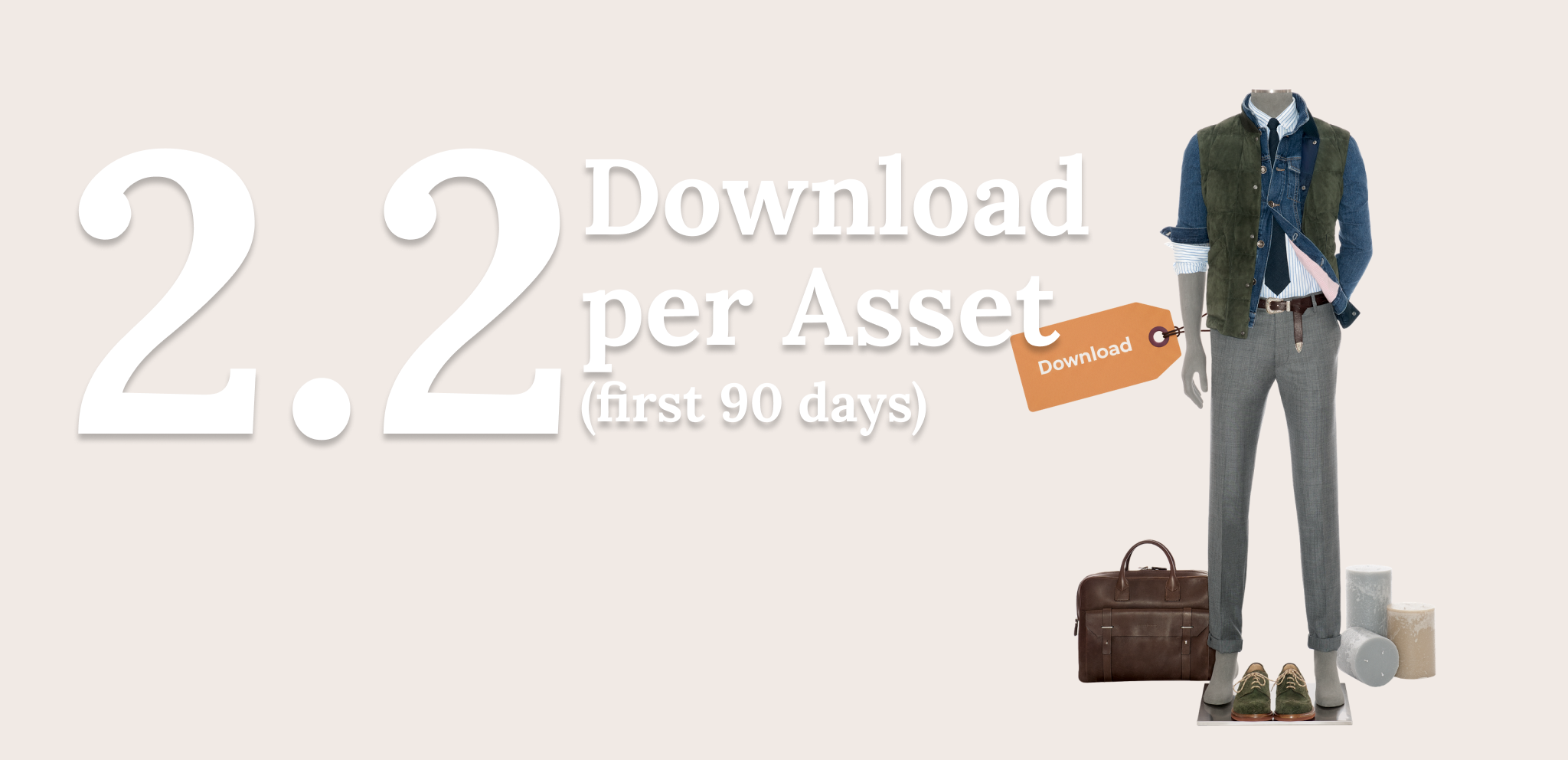
~160 active users/month and ~2.2 downloads/asset (90 days).
Management of the portals
Con l'espansione dei Brand Portals, è fondamentale ottimizzare i meccanismi per popolarli. La gestione dei contenuti nella Media Library gioca un ruolo cruciale, semplificando l'accesso e la distribuzione di materiali sensibili, grazie a strumenti come watermark e segmentazioni strategiche.
Brand Portals originate in Media Library — SeeCommerce
Completed in 2024.
Publishing process fully under the client's control, with more robust and reliable mechanisms.
Result:
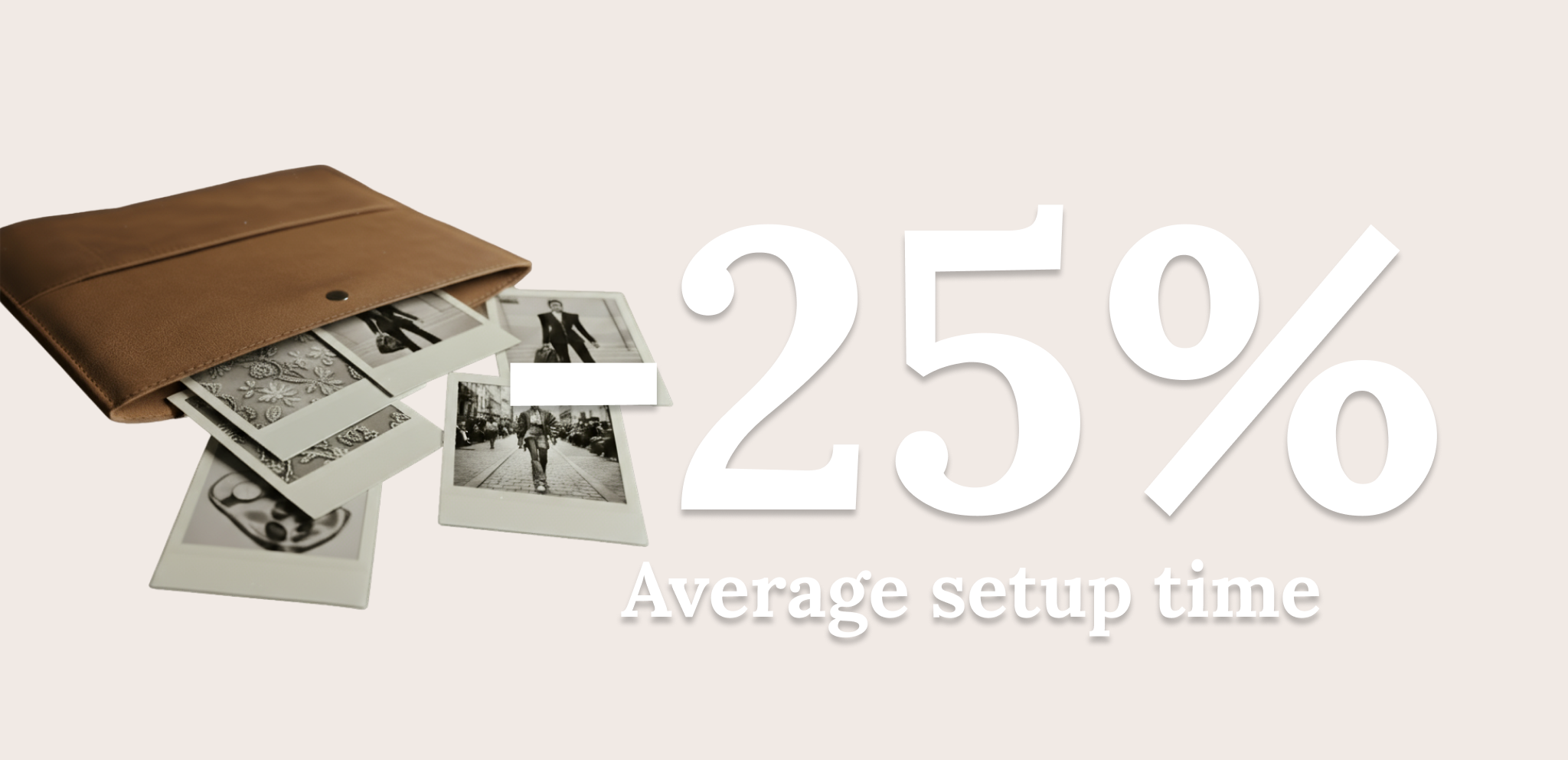
-25% of average publishing times; More effective setup with fewer recorded errors.
User registration and autonomy
The latest evolution concerned the user registration and management experience. After the MVP with single credential, a subscription system with approval, predefined roles, and customizable processes was introduced. This led to stable adoption in pilot contracts converted into active ones and onboarding perceived as clearer and more streamlined by the admin users.
User Management for Brand Portals — SeeCommerce
Completed in 2024.
Complete user management, from approvals to roles to assign, entirely in SeeCommerce.
Result:
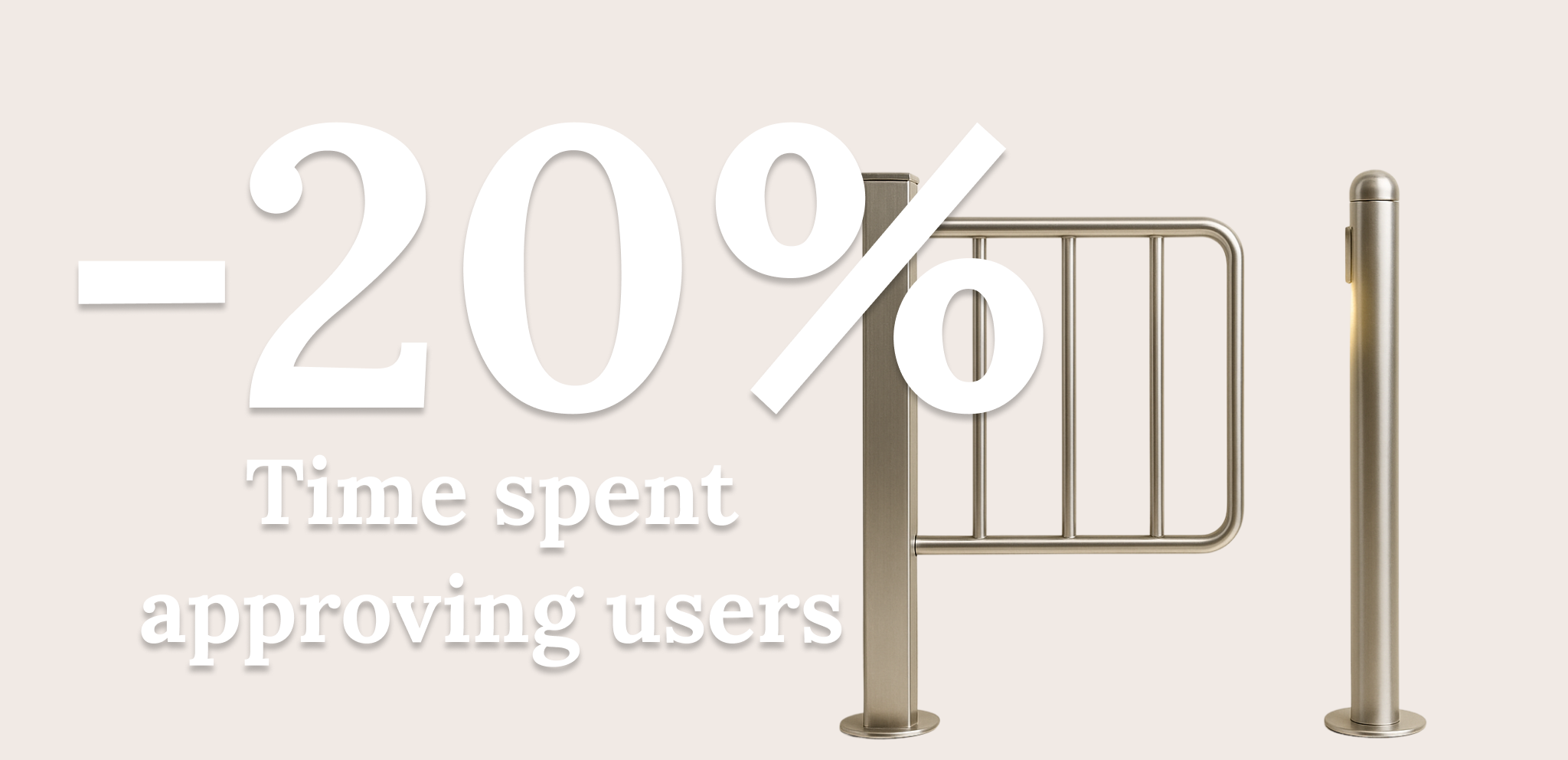
−20% time dedicated to user approvals; Described as easy to use and with a low learning curve by 80% of users.
Conclusions
Looking at the three projects together, the impact is evident: the Media Library of SeeCommerce has evolved from an idea of a centralized archive to an ecosystem of scalable and controllable portals. The metrics confirm the progress: −32% in average asset retrieval times, and 0% post-launch drop-off rate.
Beyond the numbers, the feedback collected tells of a smoother experience, with less stress for users and greater trust from clients.


A new Touchpoint: the three phases of the Brand Portal
Custom portals fully in the hands of the client, from user management to asset uploading.
Discover the Case Studies
From the internal archive to the digital showcase
Brand Portals originate in Media Library — SeeCommerce
Discover the Case Study
User Management for Brand Portals — SeeCommerce
Discover the Case Study
Summary:
Results achieved:
- Reduction of the average time to retrieve assets for external agents: −32%.
- Stable adoption, with no drop-offs post-launch.
- 76% adoption within the first month by sales agents, effectively integrating the portals into their daily workflow.
- −15% working time dedicated to disseminating new assets, thanks to the autonomy of journalists and agents in retrieving them from the portals.
Team:
Giacomo Dalia; Warda development team; client stakeholders (Vibram, Campagnolo, Fulcrum)
My role:
UX/UI Designer — discovery, information architecture, micro-interactions, prototyping, and QA.
Introduction:
SeeCommerce was born as a SaaS platform dedicated to fashion brands, aiming to centralize data and content and distribute it across multiple digital touchpoints.
Throughout collaborations with various clients, the platform has been enriched with new features designed to make the sharing experience simpler, clearer, and more effective with different user targets, through touchpoints activated and managed independently on SeeCommerce.
From this, three cornerstone projects emerged, narrated in as many case studies.
Portals as a digital showcase
The first step was to transform internal archives into Brand Portals: fully manageable external spaces in SeeCommerce, designed to share assets with different targets (Press, Trade, partners). The project introduced unified search, a clear tree structure for navigation, and role and permission management, leading to a noticeable improvement in the speed with which sales agents and communication figures can retrieve the assets they need.
From the internal archive to the digital showcase
Completed in 2024.
Branded interface equipped with a search system, consultation, and download of assets shared by the brand
Result:
Reduction of the average time to retrieve assets −32%.
~160 active users/month and ~2.2 downloads/asset (90 days).
Management of the portals
Con l'espansione dei Brand Portals, è fondamentale ottimizzare i meccanismi per popolarli. La gestione dei contenuti nella Media Library gioca un ruolo cruciale, semplificando l'accesso e la distribuzione di materiali sensibili, grazie a strumenti come watermark e segmentazioni strategiche.
Brand Portals originate in Media Library — SeeCommerce
Completed in 2024.
Publishing process fully under the client's control, with more robust and reliable mechanisms.
Result:
-25% of average publishing times; More effective setup with fewer recorded errors.
User registration and autonomy
The latest evolution concerned the user registration and management experience. After the MVP with single credential, a subscription system with approval, predefined roles, and customizable processes was introduced. This led to stable adoption in pilot contracts converted into active ones and onboarding perceived as clearer and more streamlined by the admin users.
User Management for Brand Portals — SeeCommerce
Completed in 2024.
Complete user management, from approvals to roles to assign, entirely in SeeCommerce.
Result:
−20% time dedicated to user approvals; Described as easy to use and with a low learning curve by 80% of users.
Conclusions
Looking at the three projects together, the impact is evident: the Media Library of SeeCommerce has evolved from an idea of a centralized archive to an ecosystem of scalable and controllable portals. The metrics confirm the progress: −32% in average asset retrieval times, and 0% post-launch drop-off rate.
Beyond the numbers, the feedback collected tells of a smoother experience, with less stress for users and greater trust from clients.
A new Touchpoint: the three phases of the Brand Portal
Custom portals fully in the hands of the client, from user management to asset uploading.
Discover the Case Studies
From the internal archive to the digital showcase
Brand Portals originate in Media Library — SeeCommerce
Discover the Case Study
User Management for Brand Portals — SeeCommerce
Discover the Case Study
Summary:
Results achieved:
- Reduction of the average time to retrieve assets for external agents: −32%.
- Stable adoption, with no drop-offs post-launch.
- 76% adoption within the first month by sales agents, effectively integrating the portals into their daily workflow.
- −15% working time dedicated to disseminating new assets, thanks to the autonomy of journalists and agents in retrieving them from the portals.
Team:
Giacomo Dalia; Warda development team; client stakeholders (Vibram, Campagnolo, Fulcrum)
My role:
UX/UI Designer — discovery, information architecture, micro-interactions, prototyping, and QA.
Introduction:
SeeCommerce was born as a SaaS platform dedicated to fashion brands, aiming to centralize data and content and distribute it across multiple digital touchpoints.
Throughout collaborations with various clients, the platform has been enriched with new features designed to make the sharing experience simpler, clearer, and more effective with different user targets, through touchpoints activated and managed independently on SeeCommerce.
From this, three cornerstone projects emerged, narrated in as many case studies.
Portals as a digital showcase
The first step was to transform internal archives into Brand Portals: fully manageable external spaces in SeeCommerce, designed to share assets with different targets (Press, Trade, partners). The project introduced unified search, a clear tree structure for navigation, and role and permission management, leading to a noticeable improvement in the speed with which sales agents and communication figures can retrieve the assets they need.
From the internal archive to the digital showcase
Completed in 2024.
Branded interface equipped with a search system, consultation, and download of assets shared by the brand
Result:
Reduction of the average time to retrieve assets −32%.
~160 active users/month and ~2.2 downloads/asset (90 days).
Management of the portals
With the expansion of Brand Portals, it is essential to optimize the mechanisms for populating them. Content management in the Media Library plays a crucial role, making it intuitive through mechanisms already established in SeeCommerce and simplifying its correct distribution through asynchronous publishing.
Brand Portals originate in Media Library — SeeCommerce
Completed in 2024.
Publishing process fully under the client's control, with more robust and reliable mechanisms.
Result:
-25% of average publishing times; More effective setup with fewer recorded errors.
User registration and autonomy
The latest evolution concerned the user registration and management experience. After the MVP with single credential, a subscription system with approval, predefined roles, and customizable processes was introduced. This led to stable adoption in pilot contracts converted into active ones and onboarding perceived as clearer and more streamlined by the admin users.
User Management for Brand Portals — SeeCommerce
Completed in 2024.
Complete user management, from approvals to roles to assign, entirely in SeeCommerce.
Result:
−20% time dedicated to user approvals; Described as easy to use and with a low learning curve by 80% of users.
Conclusions
Looking at the three projects together, the impact is evident: the Media Library of SeeCommerce has evolved from an idea of a centralized archive to an ecosystem of scalable and controllable portals. The metrics confirm the progress: −32% in average asset retrieval times, and 0% post-launch drop-off rate.
Beyond the numbers, the feedback collected tells of a smoother experience, with less stress for users and greater trust from clients.